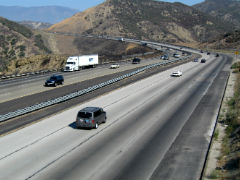
 “I NEED A MOTORCYCLE THAT CAN HANDLE BIG-ROAD TRAFFIC.”
A reader asked me the above question (in the subject line). She has already been riding two other bikes, so this wouldn’t be her first. My answer comprises the rest of this post, but I’d be more interested in your views of how to select a “highway motorcycle.” (Please add to comments below where it says “Leave a Reply”).
******************************************************************
You ask an apt question and I believe there are many decent highway motorcycles. And in fact, your own personal interpretation of what best represents a highway motorcycle would be the primary determining factor since many modern midsize (and above) motorcycles operate quite well on highways.
Some folks might want a big bike with lots of luggage space, such as a Honda Goldwing, BMW GTL or one of Harley’s bigger touring bikes. However, for others, those machines are way too big, heavy and expensive.
A lighter and more agile type of machine would be a sports-tourer. These bikes take riders long-distances with luggage, quite comfortably. They also weigh less and cost less than the biggest touring machines. However, sport tourers are still big bikes, compared to most.
Some folks like the look and experience of cruisers, which have a tremendous variety of ways they can be customized, and they come in many different weights and engine sizes. They also generally sit lower to the ground, which, especially for shorter riders, is an important consideration.
If you ride a lot in all kinds of weather, you might want to consider a bike with a windshield, or adding a windshield to an existing motorcycle.
If you don’t mind a little extra weight and spending a little extra money, you might want to consider a motorcycle with a shaft drive, which is low maintenance.
Frankly, the above comments are merely a generalized overview, since every motorcycle represents a compromise of many factors, including:
- Price
- Weight
- Design (tourer, sport-tourer, cruiser, adventure-tourer, standard….)
- Seat height
- Suspension
- Ergonomics
- Engine size
- Performance
- Drive train (chain, belt, shaft)
- Available accessories (windshield, luggage, etc)
- And more
That’s a lot of stuff to contemplate and the reality is, any person might need to gain some years of experience riding on different bikes to develop enough personal perspective to determine what’s best for him/her.
Having said all that, if I were to answer your question as briefly as possible, I would boil it down to the following:
- Weight
- Ergonomics
- Price
I would not suggest getting a bike that you, personally, consider too big or heavy, which can lower your confidence if you don’t feel you are always fully in control of it.
Any bike should be comfortable for you. Whether you prefer leaning forward, or leaning backward or sitting upright, there are different bikes that accommodate such positions. How easily it is to place your feet on the ground is important. You need to get on the bikes and experience them. Ideally, you should ride any specific bike before you pay for it, but that’s not easy to arrange with many dealers (at least in the United States), particularly if you are purchasing a new bike.
Finally, for many persons, price is as important a factor as any and you’re the only person who can evaluate that. Of course, buying a used motorcycle can save money and there are many great opportunities in buying a used bike, but other riders are comforted by a brand-new machine which, in most cases, shouldn’t have many hidden problems. (New bikes also have a warranty to handle certain problems that might present themselves, and in my experience, I’ve saved a lot of money with warranties).
Wishing you safe riding!




115 Comments